
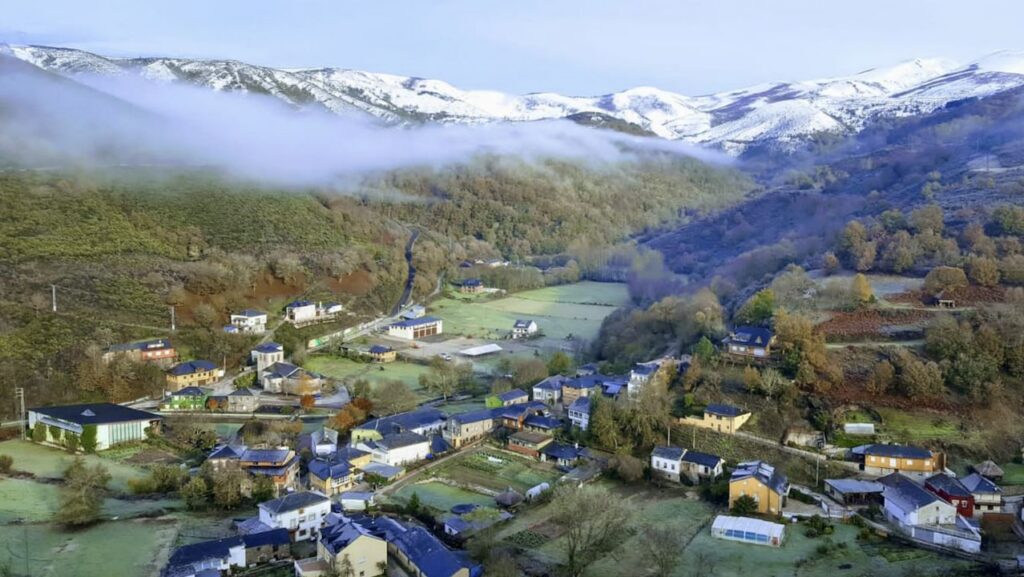
The Digital Future of Rural Areas
by Alfonso Díez Rubio, CEO UGROUND, and Alfredo Peña Castaño, UGROUND
This article was published in Economía Industrial magazine, Issue 417 (Q3 2020) – Digital Entrepreneurship by the Ministry of Industry, Trade, and Tourism. To read the full article, click here.
To the old elm, split by lightning
And half rotted away,
With the rains of April and the sun of May,
Some green leaves have appeared.
Antonio Machado, “To a Dry Elm.”
1. Introduction
In this paper, we aim to reflect on the role of the “rural” in today’s digitalized world. It is clear that the world is undergoing an enormous transformation across multiple areas. Digitalization is provoking tremendous changes in social organization, the economy, personal relationships, commerce, and more. The rural world seems to be falling behind and is slowly becoming depopulated. Is there a future for rural areas in the new digital society?
We have divided this reflection into several parts. First, we will introduce the issue of depopulation to frame it within different organizational, economic, and cultural contexts, analyzing the evolution of the rural economy across its various productive sectors. We will then delve deeper into the meaning of digitalization or digital transformation to better understand its impact on the rural landscape. Finally, we will focus on the future of rural areas: What economic and digital initiatives make sense? How can they be implemented? These final sections offer ideas for entrepreneurs and institutions to help pave the way from a fading rural world to one that finds renewed purpose in the digital society.
In this work, we use the term “rural” broadly, not limited to specific population densities or settlement sizes. Generally, we will consider that there are more densely populated areas, with medium and large cities, and everything else constitutes the rural environment. For example, we consider El Bierzo to be rural, even though it includes a medium-sized city such as Ponferrada at its center.
We believe that fostering prosperity in rural areas requires new social and organizational models. Centralized economic and social systems based on economies of scale only cover a fraction of society’s potential to create both economic and human value. The rural world must become a driving force of a modern and digital society—one that is more human and more efficient.
2. The Rural–Urban Dialectic
Spain has followed a model of competition between the rural and the urban similar to that of all developed economies. With the rise of industrialization, the service economy, and the knowledge-based economy, economic players and knowledge have naturally concentrated in urban centers, driven simply by efficiency.
As reported by El Mundo [1], between the 1950s and 1980s there was a massive migration from the countryside to the city across Europe. In Spain, the effects arrived later, as the modernization of the economy was delayed. If the rural population represented 89% of the total in developed countries in 1900, half a century later it had fallen to 48%, and today it barely exceeds 26%. At the other end of the spectrum is Germany, where the migration to cities during industrialization did not empty the countryside. Today, Germany has around 80 million inhabitants and its demographic structure is balanced—there are no huge cities or vast empty areas—which facilitates territorial cohesion, the financing of public services, and even the fight against coronavirus.
Thus, we see that rural populations move to cities in search of education, job opportunities, social interaction, knowledge, and culture—all key factors in the economic and social development of communities.
Conversely, urban populations are also attracted to rural areas for being closer to nature, for their less invasive social structures, and for their human scale. The quality of life is better (transport, pollution, food, etc.), and rural areas offer leisure opportunities through tourism, culture, and nature. Moreover, they are where certain productive activities—especially in the primary sector (agriculture, livestock, mining)—and many transformation industries are located.
The traditional dictum that has guided the balance between rural and urban areas suggests that the rural world will continue to lose weight until it reaches a stable point—an Arcadia Feliz that produces food, energy, raw materials, and tourism and culture [8]. Obviously, this approach is unacceptable, and in the remainder of this article we will explore ideas and motivations for enabling rural areas to develop with the same social and economic strength as urban centers.
Next, we will briefly examine statistical data to gain a clearer picture of the current situation in Spain.
3. Summary of the Situation in Spain through Statistical Data
If you wish to continue reading, click here to access the full article.